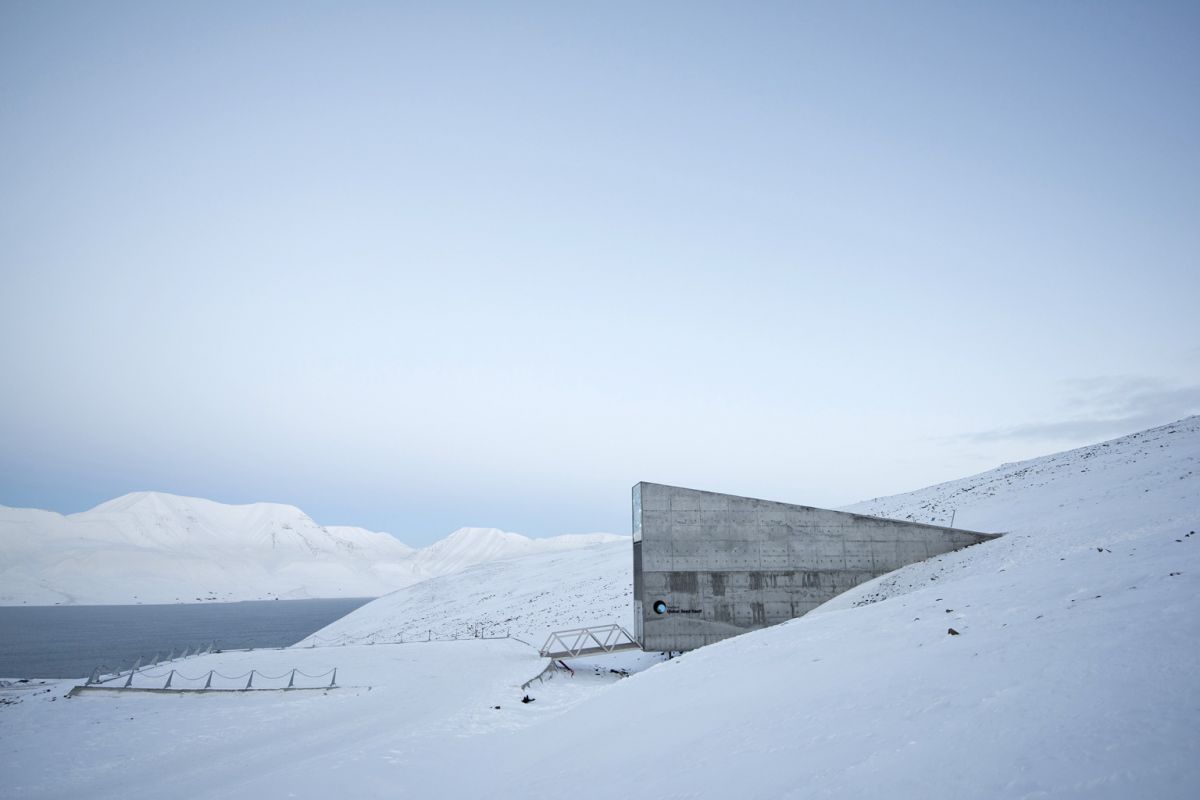
Deep within a mountain on a remote Arctic island in Norway’s Svalbard archipelago is a vault which safeguards humanity’s food supply for generations to come.
The Svalbard Global Seed Vault, which lies halfway between mainland Norway and the North Pole, is a fail-safe seed storage facility which holds the world’s largest collection of crop biodiversity.
With almost one million seed varieties, and counting, it is the ultimate insurance policy against the catastrophic loss of collections from other repositories.
Mankind will have used up its allowance of natural resources such as water, soil and clean air for all of 2019 by Monday (July 29), a report said.
The so-called Earth Overshoot Day has moved up by two months over the past 20 years, and this year’s date is the earliest ever, the study by the Global Footprint Network said.
The equivalent of 1.75 planets would be required to produce enough to meet humanity’s needs at current consumption rates.
“Earth Overshoot Day falling on July 29 means that humanity is currently using nature 1.75 times faster than our planet’s ecosystems can regenerate. This is akin to using 1.75 earths,” the environmental group, which is headquartered in Oakland, California, said in a statement.
“The costs of this global ecological overspending are becoming increasingly evident in the form of deforestation, soil erosion, biodiversity loss, or the buildup of carbon dioxide in the atmosphere. The latter leads to climate change and more frequent extreme weather events,” it added.
Calculated since 1986, the grim milestone has arrived earlier each year.
In 1993, it fell on Oct 21, in 2003 on Sept 22, and in 2017 on Aug 2.
“We have only got one Earth – this is the ultimately defining context for human existence. We can’t use 1.75 (earths) without destructive consequences,” said Mr Mathis Wackernagel, founder of Global Footprint Network.
Ms Maria Carolina Schmidt Zaldivar, Chile’s environment minister and chair of the Climate COP25 scheduled this December in its capital Santiago, said a major cause of the date falling earlier and earlier was growing amounts of carbon dioxide emissions.
“The importance of decisive action is becoming ever more evident,” she said.
Nordic countries are experiencing searing temperatures as Europe’s record-breaking heatwave moves north, the Swedish Meteorological and Hydrological Institute (SMHI) said yesterday, with some areas recording “tropical nights”.
In Sweden, the most extreme heat has headed straight for the country’s far north.
On Friday, the small town of Markusvinsa in the far north recorded a temperature of 34.8 deg C, the highest mark reached in all of Sweden so far this year.
“That’s the hottest temperature in the far north since 1945 and the third-highest temperature on record,” SMHI meteorologist Jon Jorpeland told Agence France-Presse.
Last week, several places in Sweden experienced “tropical nights”, meaning that temperatures stayed above 20 deg C throughout the night.
The tropical heat was also being felt in other Nordic countries, and the Norwegian Meteorological Institute said yesterday that it had recorded “tropical nights” in 20 different locations in southern Norway.
Heat warnings have been issued in Sweden, Norway and Finland, and last week, Finnish police even warned motorists to be mindful of moose, which were increasingly crossing roads in search of water to quench their thirst.
Meanwhile, the heatwave that smashed national temperature records in Belgium, Germany and the Netherlands, and which baked Paris in its highest-ever temperature of 42.6 deg C in the middle of last week, has dissipated a little, but many travellers faced disrupted journeys.
The mercury dived in France with outbreaks of drizzle as state weather service Meteo-France lifted red alerts imposed in 20 departments.
In Germany, the country’s highest mountain Zugspitze – standing at 2,962m – was still almost completely covered in snow despite a national temperature record of 42.6 deg C in the north on Thursday.
“The thick snow cover has provided a buffer against (the mountain) absorbing the high temperatures this year,” a spokesman for the research station at Zugspitze said.
Commuters and holidaymakers saw travel plans blighted with disruption to air and rail services in several European countries.
Flights at London’s Heathrow and Gatwick airports were cancelled and delayed – some by more than two hours – with holiday destinations such as Alicante, Rome and Lisbon affected.
Elsewhere in the British capital, there was still travel havoc due to rails buckling under the heat and fires breaking out along commuter lines.
The Met Office advised against non-essential travel.
At Paris’ Gare du Nord, an electrical failure halted domestic and international high-speed trains during Friday lunchtime, including Eurostar and Thalys services, although traffic gradually resumed.
Thalys – which links Paris to Brussels, Amsterdam and Cologne – also saw disruption, with slow trains amid fears that infrastructure could overheat.
At the peak of the heatwave, temperatures on the tracks soared to up to 15 deg C higher than that of the air.
In Switzerland, train engineers painted rails white to reflect the heat of the sun.
In northern and central France, the heatwave has been particularly brutal in the countryside, aggravating fires which have seen thousands of hectares of crops destroyed.
“More than 3,200ha have already gone up in flames since the start of summer,” Interior Minister Christophe Castaner said.
Extreme global temperatures are pushing the human body “close to thermal limits”, according to a climate scientist.
Record-breaking heat has swept through Europe this week with temperatures topping 40C in a number of countries.
However, in places such as South Asia and the Persian Gulf, people are already enduring temperatures reaching up to 54C.
Despite all the body’s thermal efficiencies, these areas could soon be uninhabitable, according to Loughborough University climate scientist Dr Tom Matthews in The Conversation.
When air temperature exceeds 35C, the body relies on sweating to keep core temperatures at a safe level. However, when the “wet bulb” temperature – which reflects the ability of moisture to evaporate – reaches 35C, this system no longer works.
“The wet bulb temperature includes the cooling effect of water evaporating from the thermometer, and so is normally much lower than the normal (“dry bulb”) temperature reported in weather forecasts,” Dr Matthews wrote.
“Once this wet bulb temperature threshold is crossed, the air is so full of water vapour that sweat no longer evaporates,” he said.
This means the human body cannot cool itself enough to survive more than a few hours.
“Without the means to dissipate heat, our core temperature rises, irrespective of how much water we drink, how much shade we seek, or how much rest we take,” he explained.
Some areas – which are among the most densely populated on Earth – could pass this threshold by the end of the century, according to Dr Matthews.
There is already evidence wet bulb temperatures are occurring in Southwest Asia.
With climate change starting to profoundly alter weather systems, rising temperatures could soon make parts of the world uninhabitable.
If electricity can be maintained, living in chronically heat-stressed conditions may be possible but a power outage could be catastrophic.
In a recent paper published in Nature Climate Change, Dr Matthews and his team looked at the probability of a “grey swan” event in the case of extreme heat coinciding with massive blackouts.
Mega blackouts sometimes follow powerful tropical cyclones. Researchers found that dangerously hot temperatures during a period with no electricity could have catastrophic consequences.
“We looked at tropical cyclones, which have already caused the biggest blackouts on Earth, with the months-long power failure in Puerto Rico after Hurricane Maria among the most serious,” Dr Matthews wrote.
“We found that as the climate warms, it becomes ever more likely that these powerful cyclones would be followed by dangerous heat, and that such compound hazards would be expected every year if global warming reaches 4C.
“During the emergency response to a tropical cyclone, keeping people cool would have to be as much a priority as providing clean drinking water.”
Heat-stressed countries are likely to see the largest absolute increases in humid-heat and they are often the least well-prepared to deal with the hazard. This could drive mass migration, which would make heat a worldwide issue – even for countries that are not experiencing scorching temperatures.
Dr Matthews wrote: “The challenges ahead are stark. Adaptation has its limits. We must therefore maintain our global perspective on heat and pursue a global response, slashing greenhouse gas emissions to keep to the Paris warming limits.
“In this way, we have the greatest chance of averting deadly heat – home and abroad.”
Some 200 reindeer have been found dead from starvation in the Arctic archipelago Svalbard, an unusually high number, the Norwegian Polar Institute said Monday (July 28), pointing the finger at climate change.
During their annual census of the wild reindeer population on the group of islands in the Arctic ocean, about 1,200 kilometres from the North Pole, three researchers from the polar institute identified around 200 deer carcasses believed to have starved to death last winter.
Ashild Onvik Pedersen, head of the census, said the “high degree of mortality” was a consequence of climate change, which according to climate scientists, is happening twice as fast in the Arctic as the rest of the world.
“Climate change is making it rain much more. The rain falls on the snow and forms a layer of ice on the tundra, making grazing conditions very poor for animals,” she told AFP.
In winter, Svalbard reindeer find vegetation in the snow using their hooves, but alternating freezing and thawing periods can create layers of impenetrable ice, depriving the reindeers of nourishment.
According to Onvik Pedersen, a comparable death toll has only been recorded once before – after the winter of 2007-2008 – since monitoring of the reindeer population started 40 years ago.
The increased mortality is also due in part to a significant increase in the number of reindeer in the Norwegian archipelago. That is partly thanks to climate change and the warmer summers, meaning more individuals compete in the same grazing areas.
Since the 1980s, the number of reindeer has doubled in Svalbard, and now stands at around 22,000, according to the Norwegian Polar Institute.
The speed of climate disruption is outstripping many animals’ capacity to adapt, according to a study that warns of a growing threat to even common species such as sparrows, magpies and deer.
Scientists behind the research described the results as alarming because they showed a dangerous lag between a human-driven shift in the seasons and behavioural changes in the natural world.
Previous academic work has shown that species respond to warming temperatures by earlier timing of biological events, for example egg-laying by birds, budding of plants and flying of insects. The new metastudy, published in Nature Research, examines how effective this is in terms of reproduction and survival.
Based on 10,090 abstracts and extracted data from 71 published studies, it found a clear lag in the majority of species studied and none could be considered safe. “The probability that none of the study species is at risk is virtually zero,” the paper notes.
The authors said hundreds of thousands of species were not covered by their study, which was weighted heavily towards birds in the northern hemisphere, but they said the problems of adaptation to climate change were likely to be even greater for other animals already deemed at risk of extinction.
Viktoriia Radchuk of the Leibniz Institute for Zoo and Wildlife Research in Germany, said: “Personally I find the results alarming. Species attempt to adapt to changing environment, but they cannot do it at a sufficient pace to ensure that populations are viable. Climate change has caused irreversible damage to our biodiversity already, as evidenced by the findings of this study. The fact that species struggle to adapt to the current rate of climate change means we have to take action immediately in order to at least halt or decrease the rate.”
A similar message was delivered to the UK parliament on Tuesday as senior conservation figures warned that the nation’s natural infrastructure – which provides fresh water, clean air, carbon sequestration and human wellbeing – was being undermined by the climate crisis, pollution, urban sprawl and budget cuts.
Tony Juniper, the chair of Natural England, which is the government’s main advisory body on conservation, said: “The 21st century will be characterised by our success or not in wrestling with these huge challenges. If we carry on as we are, I fear biodiversity will continue to decline in this country.”
He told the Environmental Audit Committee that the present system of monitoring and protecting nature reserves and sites of special scientific interest had been undermined by a 60% budget cut over the past 10 years, which had left a stressed and demoralised skeleton crew.
It was not too late to reverse this, he said, and outlined plans for a “nature recovery network” that would rebuild woodlands and peatlands, and work with farmers to protect species and restore soil quality, which can draw down the carbon dioxide that causes global heating.
“This is the soundest investment we can make in the future of the country,” Juniper said. “Unlike other assets – like roads and bridges, which depreciate over time – you get more value in the future,” he said, citing economists’ estimates of a 10 to 100-fold return in terms of better food, water and carbon sequestration.
His views were echoed by the head of the Committee on Climate Change, John Gummer, who said it would be impossible for the UK to reach its goal of “net zero” emissions by 2050 without investing in biodiversity protection and renewal.
Fashion giant H&M will soon start charging customers in Singapore 10 cents for each plastic or paper bag as part of a new initiative to reduce waste.
The move, which takes effect at all H&M stores from next Thursday (July 25), is part of a packaging strategy to reduce plastic use in the long run, said the Swedish retailer in a press release on Monday (July 15).
All proceeds collected from the shopping bag charge will be donated to WWF Singapore’s Plastic ACTion (PACT) initiative, which is an industry-wide initiative to reduce plastic use by 2030.
Under PACT, proceeds from H&M’s shopping bag charge will go towards innovations to find sustainable alternative materials, research into plastic pollution and conservation projects.
Shoppers who patronise the fashion giant have welcomed the move against plastic use.
Graphic designer Audrey Ng, 25, who shops at H&M every other month, said she does not mind paying for a bag.
“If I really needed a bag, then why not pay for it? It’s 10 cents, which is not expensive and the money also goes to a good cause.”
Ms Ng added that the charge would also cause shoppers to determine if they really needed a bag before accepting one.
Civil servant Ginny Goh, 44, said that while she does not think plastic bags should be banned entirely, charging for them is the right move.
“I think all single-use bags should be chargeable. We need to drastically cut down on their use and the only way is to charge. This way, people will only take what they need.”
Ms Goh’s two teenage daughters also shop at H&M and she regularly encourages them to bring their own bags.
“I don’t think it’s a big deal to charge for bags. People will get used to it. In many other countries, bags are already chargeable everywhere, in the shops and in the supermarkets.”
H&M has already rolled out charges for shopping bags in other countries including Sweden, Malaysia, the United Kingdom, Japan and Switzerland.
H&M is not the first company in Singapore to charge for shopping bags.
In October last year, the Cotton On Group embarked on a similar programme to phase out plastic shopping bags from all its stores worldwide, including in Singapore. The fashion chain now provides shoppers with recyclable paper bags which cost 10 cents each.
Cosmetics and skincare company The Body Shop stopped providing plastic bags in January 2018, and it also charges 10 cents for each recyclable paper bag.
Lifestyle brand Miniso and clothing chain Bossini have also been charging 10 cents for a bag since 2017 and 2012 respectively.
Swedish furniture giant Ikea started charging for plastic bags in 2007 before phasing them out in 2013. Today, shoppers must bring their own bags or buy a reusable polypropylene bag at 90 cents each.
Asked about customer reaction to the zero plastic bag policy, the head of sustainability for Ikea South-east Asia, Ms Soh Bee Lian, said there was almost no negative reaction.
“We believe that Singaporeans want to do what they can for the environment,” she said.
Speaking about H&M’s initiative, the company’s country manager for South-east Asia, Mr Fredrik Famm, said: “To create a more sustainable fashion future, we need to take the lead by tackling some of the most significant challenges that are facing our planet and society.”
WWF Singapore chief executive officer Maureen DeRooij said that H&M’s move comes at a crucial time when bold action is needed to change how plastics are produced, used and disposed off.
“A bag charge, proven to be effective in reducing plastic use, is a crucial step that retail businesses can take to stop plastic pollution,” she said.
SINGAPORE – As a small, low-lying island state, Singapore will continue to take preventive action against the impact of climate change, Senior Minister Teo Chee Hean said on Thursday (July 4).
Mr Teo drew attention in particular to the Republic’s efforts in going low-carbon and managing rising sea levels in a speech at the sixth Asian edition of the Shell Powering Progress Together forum.
Singapore raised the minimum level for newly reclaimed land by 1m in 2011, a move that preceded the Intergovernmental Panel on Climate Change’s (IPCC) most recent report in 2014 by three years.
The report projected that global sea levels – relative to Singapore’s sea levels from 1986 to 2005 – will rise 1m by 2100 if the world’s current carbon emission trajectory remains unchanged.
But sea waters could potentially rise even further, Mr Teo noted, as the report did not factor in the impact from the possible collapse of melting Antarctica ice shelves.
“We are currently studying what further measures we need to take, such as reclamation, sea walls or pumping stations, to better protect our coastal areas,” said Mr Teo, who is also Coordinating Minister for National Security.
“By planning early, we can phase in the necessary measures so that the cost can be spread out over many years.”
For example, the new mega-port at Tuas Terminal and Changi Airport Terminal 5 will be built 1m and 1.5m above the minimum level required respectively.
The focus of this year’s forum was on sustainable energy use in future cities. At the forum, Shell launched its first global City Solutions Living Lab, to be located here.
A multidisciplinary team will develop technological solutions aimed at helping cities move people and goods with lower emissions and switch to cleaner energy options, while working together with city authorities.
Shell said it chose to base the lab in Singapore due to the city-state’s active push for energy transition and sustainability, its pro-business environment and Shell’s longstanding presence here, going back to 1891.
Singapore’s commitment to a green environment dates back to the 1960s and going low-carbon is an extension of that, said Mr Teo.
Singapore introduced a carbon tax earlier this year and is investing in infrastructure for more electric vehicles to reduce the nation’s carbon footprint.
The tax, currently set at $5 per tonne of greenhouse gas emissions in carbon dioxide equivalent, will be reviewed in 2023 with a view to increasing it to between $10 and $15 by 2030.
Mr Teo added that Singapore is happy to work with businesses like Shell who have adopted significant measures to reduce their carbon footprint.
“Businesses need to transform their business models for a world that demands corporate climate responsibility, and take advantage of the opportunities that this offers,” he said.